
Business
Cost of Accounting and Bookkeeping Services: What to Expect

Managing finances is one of the most essential responsibilities of any business. Whether it is a small retail store, a growing e-commerce brand or a medium enterprise, having accurate financial records enables proper decision-making. This is where accounting and bookkeeping services play a big role. Many businesses prefer outsourcing these tasks because it ensures accuracy, compliance, and saves both time and cost. However, one common question almost every business owner has is: what is the cost of accounting and bookkeeping services and what should you expect?
This guide explains how pricing works, what factors influence the cost, and how to choose the right service provider. It also highlights why working with reliable accounting companies in Abu Dhabi can bring value to your organization.
Why Businesses Outsource Accounting and Bookkeeping Services
Outsourcing financial management is becoming more popular for several reasons:
- It reduces the need for an internal finance team.
- It ensures experts handle records and reporting.
- It helps companies avoid penalties for compliance issues.
- It provides accurate data for budgeting and planning.
Professional firms specialize in accounting and bookkeeping services. They use certified accountants, modern software, and follow international standards, giving businesses peace of mind.
Factors That Influence the Cost
The cost of accounting services varies based on multiple elements. Here are the major factors:
1. Size of the Business
The larger the business, the more transactions it has. More transactions require more time for recording, reporting, reconciliation, and auditing.
- Small businesses may need simple monthly reports
- Larger companies often require daily bookkeeping and multiple statements
This directly impacts pricing.
2. Volume of Transactions
This is one of the biggest cost factors. For example:
- A restaurant with daily sales transactions
- A trading company dealing with purchase orders and supplier payments
- A construction firm issuing multiple invoices and payroll entries
Higher volume means more accounting time and higher fees.
3. Scope of Services Required
Some businesses only need bookkeeping services, while others need complete accounting support. The service scope can include:
- Bookkeeping and data entry
- Accounts payable & receivable
- Payroll processing
- Bank reconciliation
- Financial statements
- VAT filing
- Budgeting and forecasting
The more services required, the higher the total cost.
4. Software Used
Advanced software ensures accuracy and real-time financial visibility. Accounting companies may use:
- QuickBooks
- Tally
- Zoho Books
- Xero
- Sage
- ERP systems
If the firm needs to integrate with your business software, additional cost may apply. However, using professional tools reduces human error and saves time.
5. Industry Type
Some industries require complex reporting:
- Construction
- Trading and logistics
- Manufacturing
- Healthcare
- Real estate
These industries involve custom reporting, cost allocation, and regulatory filings. Because they require specialized skills, the cost is higher compared to retail or service businesses.
Typical Pricing Models
Accounting firms generally offer three pricing models:
Monthly Fixed Fee
This is the most common. Businesses pay a fixed amount every month based on workload and scope.
Hourly Billing
Some firms charge per hour. This model is usually used when:
- Workload is unpredictable
- Special projects are needed
Package-Based Pricing
Companies can choose service bundles such as:
- Basic bookkeeping
- Bookkeeping + VAT filing
- Complete accounting solutions with payroll
Packages help control cost while ensuring coverage of essential services.
Average Cost Range
While prices vary, here is a general estimate for understanding:
- Basic bookkeeping: low to moderate cost per month
- Complete accounting + payroll + VAT: higher range per month
- Auditing or financial consulting: priced separately
Businesses should always request a quotation and compare services.
Why Choose Accounting Companies in Abu Dhabi
If your business is operating in the UAE, working with professional accounting companies in Abu Dhabi offers major benefits. They understand:
- UAE corporate tax rules
- VAT laws and compliance
- Local business regulations
- Industry requirements
A local firm provides faster support and ensures your company follows legal requirements. With increasing tax regulations in the UAE, hiring experts is no longer optional—it has become essential.
What You Get for the Cost
When you invest in accounting and bookkeeping services, you gain multiple advantages:
1. Accurate Financial Records
Professionals ensure every transaction is properly recorded, giving you correct financial data.
2. Compliance with Laws
Tax filing, VAT returns, payroll rules—everything is handled correctly, reducing risk of penalties.
3. Time Savings
Business owners don’t need to spend hours on accounting work. They can focus on sales, growth and operations.
4. Business Insights
Financial reports help you:
- Identify profit and loss areas
- Predict cash flow
- Plan budgeting and investment
This helps in smarter decision-making.
How to Choose the Right Provider
To get the best value for your money, consider the following:
- Check experience and qualifications
- Understand the pricing structure
- Confirm which software they use
- Ask about turnaround time
- Ensure they understand UAE regulations
- Verify data security processes
Choosing experienced accounting companies in Abu Dhabi ensures your financial data is managed professionally.
Final Thoughts
The cost of outsourcing accounting and bookkeeping services depends on the size of the business, volume of transactions, industry, and scope of work. While pricing differs from firm to firm, what truly matters is value.
Hiring professionals can save time, improve accuracy, and reduce the risk of financial or legal issues. With increasing business regulations in the UAE, partnering with qualified accounting companies in Abu Dhabi ensures compliance and financial stability.
Whether you are a startup or an established company, investing in accounting services allows you to focus on running your business while experts manage your financial records. In the long run, this decision improves efficiency, supports growth, and leads to better financial planning.
Business
Project Portfolio Management Software vs Traditional Project Management Tools: Key Factors for Your Decision


Choosing the right project management solution can impact an organization’s ability to deliver on its strategic goals. While traditional project management tools have led the market, the rising complexity of managing multiple projects has shifted the focus to Project Portfolio Management (PPM) software. This dynamic environment necessitates a thorough comparison to guide decision-making.
As businesses grapple with diverse project demands, understanding the distinction between PPM software and traditional project management tools is key. Below, we delve into the nuances of both, offering insights to help you decide which fits your organizational goals and operational style.
Project Portfolio Management Software: Streamlining Strategic Alignment
PPM software exceeds traditional project management tools by providing a holistic view across multiple projects. This top-down approach is critical for aligning projects with strategic business objectives, enabling decision-makers to prioritize and adjust project portfolios in real time.
Through features like consolidated dashboards, resource allocation, and risk management analytics, PPM platforms help optimize return on investment and ensure that each project contributes to the larger business goals. This integration of strategy and execution positions PPM as a critical tool for executive-level strategy.
Organizations should best software for project portfolio management evaluate whether their current project complexity and strategic needs justify the investment in PPM software. If the business demands a central system for managing a diverse project portfolio, transitioning to a PPM platform may deliver significant strategic advantages.
Traditional Project Management Tools: Focused Control for Individual Projects
Traditional project management tools excel in providing granular control over individual projects. These tools are indispensable for project managers who require detailed task scheduling, budget tracking, and communication features specific to individual projects.
While not typically designed for overseeing multiple projects simultaneously, traditional tools often offer greater simplicity and ease of use. This makes them ideal for smaller teams or organizations with a straightforward project structure. Moreover, some of these tools have evolved to incorporate Gantt chart capabilities and collaboration features, thus enhancing project coordination.
Before choosing traditional project management software, assess whether your organization values focused project execution over cross-project visibility. For teams that manage a limited number of projects without the need for strategic realignment, traditional tools may remain the logical choice.
Key Factors to Consider When Choosing Between PPM Software and Traditional Tools
When deciding between PPM software and traditional project management tools, consider factors like project scale, complexity, and strategic integration. The nature and number of simultaneous projects an organization manages should drive the selection process.
Cost-effectiveness is also a deciding factor; PPM platforms may require higher initial investment and training, yet they can offer savings through improved efficiencies and strategic alignment. Assessing your company’s operational maturity and growth trajectory will shed light on the appropriate investment. PPM might be more suited for businesses in growth phases or those managing multiple high-value projects.
Lastly, user adoption and ease of integration into existing workflows are paramount. A tool’s benefits are only realized when it is fully embraced by the team, so consider the learning curve and change management required for implementation.
Making the Right Decision for Your Organization’s Project Management Needs
The right project management approach is contextual, hinging on the specific needs and circumstances of an organization. Leaders must critically assess their current and future project management requirements to make an informed decision.
It’s beneficial to pilot the chosen solution with a small set of projects or teams before scaling it organization-wide. Such a tactic allows for fine-tuning and ensures the selected tool can truly enhance project delivery outcomes. Additionally, seeking feedback from project managers and team members can provide practical insights for optimization.
Organizations might also consider a hybrid approach, leveraging both PPM software and traditional tools where appropriate, to combine strategic oversight with detailed project management capabilities, thus customizing their project management ecosystem to their unique requirements.
Ultimately, the decision between Project Portfolio Management software and traditional project management tools is not a one-size-fits-all. It hinges on a nuanced understanding of your organization’s strategic priorities, project complexity, and operational workflows. By carefully considering these factors and engaging in thorough evaluation, organizations can select the tool that best enables their teams to deliver projects successfully and align with overarching business objectives.
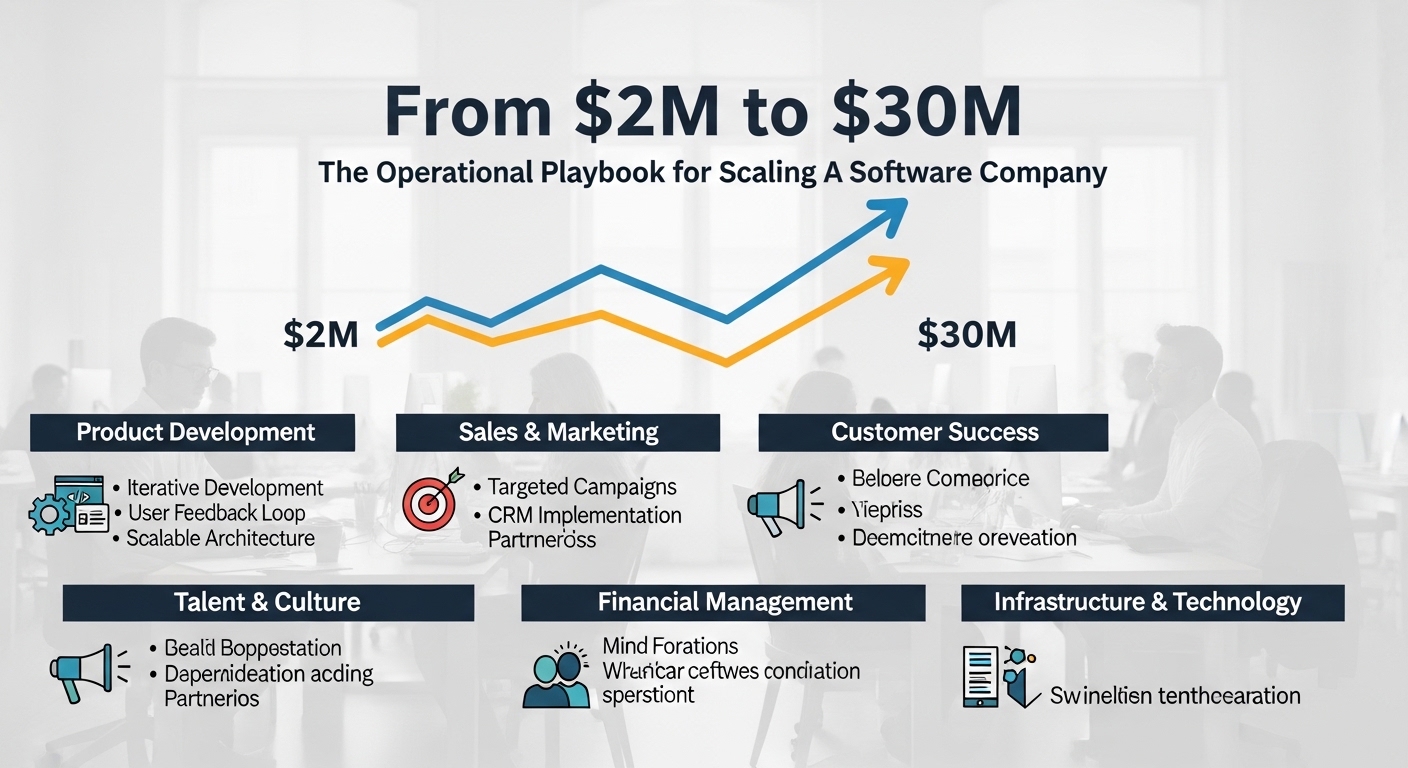
Growth is often described as a straight upward line. In reality, scaling a company feels more like building the plane while flying it, while also expanding it from a two-seater to a commercial aircraft mid-air. During the five years it took Search Atlas Group to grow from a small bootstrapped team to a 250-person, multi-brand organization, every system, process, and assumption we held failed at some point. The companies that survive these failures are the ones that build the operational muscle to recover quickly, redesign intelligently, and continue moving.
“Scaling from $2M to $30M ARR broke every part of our business at least twice. Here’s what I learned about building operations that can withstand hypergrowth.”
This is the story of how we scaled from a single agency (LinkGraph) into a multi-brand portfolio, launched an award-winning SEO software (OTTO SEO), integrated an acquisition (Signal Genesys), and grew ARR from $2M to more than $30M—without sacrificing discipline, culture, or quality. It’s also a framework any operator or founder can apply to their own organization.
- Building the Company We Would Need, Not the Company We Already Were
In the early years, operational decisions felt deceptively simple. Our agency, LinkGraph, was small, scrappy, and growing quickly. Many early-stage companies focus exclusively on revenue. We focused on infrastructure, the systems, and cadences that would allow us to scale beyond founder-led heroics.
Three early choices became the foundation for everything that followed:
- Build systems before you need them. Standardized project workflows, documentation practices, and planning cadences were in place years before we crossed $10M ARR. This prevented chaos when the headcount doubled and tripled.
- Clarity is non-negotiable. Every team member needed to understand priorities, the “why” behind decisions, and how their work connected to outcomes. This alignment reduced friction and allowed delegation to scale predictably.
- Hire ahead of need. Finance, HR, engineering, and operations leaders were hired before they felt strictly necessary. Hypergrowth punishes reactive hiring. Proactive hiring created stability.
These choices allowed us to absorb early growth shocks without burning out the team or losing operational control. More importantly, they established a culture where discipline, accountability, and execution were valued as much as revenue.
- Strategic Expansion (2021–2023) From One Brand to a Multi-Brand Portfolio
With operational maturity improving, our ambitions widened. We saw an opportunity to expand from a single-agency model into a multi-brand portfolio that combined agency services, proprietary technology, and SaaS products.
The Signal Genesys Acquisition
Acquisitions can be tempting, but they fail if approached haphazardly. When evaluating Signal Genesys, we prioritized operational fit over revenue. Did the team share our commitment to process, clarity, and culture? Would workflows and systems align with ours?
Integration followed a deliberate 90-day playbook:
- First 30 days: clarity, roles, systems access, and customer mapping
- Second 30 days: operational integration, financials, workflows, and reporting
- Third 30 days: strategic integration, branding, product alignment, and go-to-market coordination
Rushing would have broken the acquisition. Thoughtful integration turned it into an operational asset.
Managing Multiple P&Ls
Running three brands, LinkGraph, Signal Genesys, and OTTO SEO, required balancing autonomy with shared operational discipline. We built:
- Shared infrastructure for finance, HR, analytics, and operations
- Brand-specific teams for product, marketing, and sales
- Leadership cadences that enabled independence without losing alignment
This portfolio model increased resilience, accelerated growth, and prevented one team’s priorities from derailing another’s.
Hiring the Leadership Team
As complexity grew, the need for strong operators became critical. We expanded our leadership bench with people capable of running large teams, building scalable systems, and maintaining excellence. These leaders allowed the company to operate predictably even as headcount doubled and workflows became more complex.
- Market Leadership (2023–2024)
Launching OTTO SEO and Operating at Scale
Our most visible leap came with OTTO SEO, our AI-powered search software. Bringing the product to market required precise coordination across engineering, marketing, customer success, and sales.
Go-to-Market Execution
We balanced two growth engines simultaneously:
- Enterprise sales with high-profile clients including Roto-Rooter, Shutterfly, and Serena & Lily
- Product-led growth with user onboarding, self-service flows, and rapid iteration cycles
Sophisticated go-to-market operations kept these two motions aligned and measurable.
Scaling to 250+ Employees
Managing a 250-person, multi-brand organization demanded:
- Predictable quarterly planning and review cycles
- Clear ownership structures and decision-making authority
- A culture that rewarded accountability and continuous learning
- Systems that scaled without adding bureaucracy
We clarified values early and reinforced them consistently, which protected our culture even during rapid hiring.
Recognition and Operational Maturity
By 2024, OTTO SEO earned recognition as Best Global SEO Software. ARR surpassed $30M. Our systems held strong because we had built them deliberately, iterated when they failed, and maintained operational discipline at every stage.
Key Operational Lessons and Frameworks
Scaling hypergrowth is not about hacks or luck. It is about repeatable systems, disciplined leadership, and clarity of purpose. Here are the frameworks that made it possible:
- Systems Over Heroes
Build processes that do not depend on individuals. Early growth often relies on founder or “hero” work. Someone does ten things at once. To scale sustainably, design workflows and tools that function even when heroes leave, get promoted, or are busy elsewhere.
- Strategic Clarity
Every team member must understand:
- What matters most
- Why it matters
- How success is measured
Clarity reduces friction, improves execution, and allows the company to scale without chaos.
- Operational Rhythm
Establish predictable cadences for planning, review, and execution. Quarterly and weekly reviews, operational dashboards, and leadership check-ins create stability even in high-velocity environments.
- Acquisition Integration Playbook
- Conduct operational due diligence, not just financial
- Plan the first 90 days carefully: clarity, integration, and strategic alignment
- Decide early when to integrate fully versus operate semi-autonomously
- Dual-Model Advantage
Operating both agency services, LinkGraph, and SaaS, OTTO SEO, creates operational leverage:
- Recurring SaaS revenue stabilizes cash flow
- Agency services provide immediate operational feedback
- Cross-selling opportunities increase lifetime value
Different operational models coexist under a single disciplined framework.
- Hiring for Hypergrowth
- Hire ahead of need, not just in the moment
- Build bench strength in critical functions
- Hire operators to manage processes and visionaries to expand the business
Well-timed hiring prevents bottlenecks and reduces firefighting during high-growth periods.
Closing Thoughts: Thought Leadership in Practice
Scaling from $2M to $30M ARR is not glamorous. It breaks systems, exposes weaknesses, and tests leadership rigorously. The difference between companies that survive and those that collapse is operational resilience. Resilient companies rebuild, standardize, and execute even while growing faster than the systems they designed can handle.
For founders and operators:
- Build infrastructure early, even if it seems “too soon”
- Hire leaders capable of scaling themselves and their teams
- Design repeatable processes that survive stress
- Align every decision with strategy, clarity, and culture
Hypergrowth does not reward clever hacks or luck. It rewards preparation, resilience, and operational discipline. At Search Atlas, these principles allowed us to grow from $2M to $30M ARR, launch OTTO SEO, integrate Signal Genesys, and maintain culture and focus across a 250-person organization.
This is the playbook. It is not flashy. It does not promise overnight success. But it works. Any operator willing to invest in it can follow it.

Running a RAK ICC company in 2026 comes with many opportunities. Offshore structures in Ras Al Khaimah are stable, cost-effective, and flexible. But success depends on proper banking, economic substance, and compliance.
If you want rak icc company banking substance compliance, you need clear guidance. Understanding the rules, deadlines, and best practices ensures your company stays fully compliant. This guide is based on real experience working with RAK ICC companies. It explains each requirement in simple words, short sentences, and practical steps.
The goal is clarity, trust, and actionable advice.
What Is a RAK ICC Company?
RAK ICC stands for Ras Al Khaimah International Corporate Centre.
It is an offshore company registry. Companies formed under RAK ICC rules can:
- Hold assets
- Conduct international business
- Maintain privacy
- Operate with no local sponsor
RAK ICC companies cannot trade directly in the UAE. They are designed for international activity.
Why Compliance Matters in 2026
Compliance protects your company. It avoids fines, freezes, or reputational damage.
Legal Requirements
RAK ICC companies must follow:
- Registration rules
- Banking transparency
- Economic substance obligations
Failing to comply can cause severe consequences.
Banking for RAK ICC Companies
Banking is essential. Without a reliable account, operations stall.
Choosing a Bank
Select banks familiar with offshore companies. Many global banks in the UAE and nearby jurisdictions accept RAK ICC entities.
Documents Required
Banks generally require:
- Company incorporation certificate
- Memorandum and Articles of Association
- Shareholder and director IDs
- Proof of business purpose
- Source of funds documentation
Tips for Smooth Banking
- Keep the structure simple
- Limit layers of ownership
- Maintain clean corporate records
Banks review ownership, purpose, and transaction history before approval. Clear documentation accelerates approval.
Economic Substance Requirements
What Is Economic Substance?
Economic Substance Rules (ESR) ensure offshore companies have real presence for certain activities.
When ESR Applies
The UAE requires companies to demonstrate substance if they perform:
- Banking
- Insurance
- Holding company activities
- Investment fund management
- Shipping
How to Demonstrate Substance
- Conduct core income-generating activities in RAK ICC
- Have qualified employees
- Maintain adequate premises (can be virtual)
- Keep proper accounting records
Even exempt holding companies should maintain basic records and board minutes to prove legitimacy.
Annual Compliance Requirements
License Renewal
RAK ICC companies must renew licenses annually.
Registered Agent Requirement
Every RAK ICC company must have an active, approved registered agent. The agent handles filings, notifications, and correspondence.
Record Keeping
Keep:
- Corporate records
- Shareholder and director data
- Financial transactions
- Board and meeting minutes
Retention period is usually 5 years.
Reporting and Filing
RAK ICC requires companies to submit certain filings:
- Annual license renewal
- Registered agent confirmation
- Any updates to directors or shareholders
Filing late may lead to penalties or suspension.
Banking & Compliance Best Practices
Maintain Simple Structures
Avoid overly complex ownership chains. Banks and regulators prefer transparency.
Keep Records Up to Date
Update shareholder changes immediately. Keep minutes and resolutions documented.
Monitor Transactions
Large transfers should have clear documentation. This supports economic substance and banking rules.
Common Challenges Companies Face
Bank Rejections
Common causes:
- Poor document quality
- Unclear business purpose
- Complex ownership
Substance Non-Compliance
Failing to demonstrate economic activity leads to warnings and fines.
Missed Filings
Late license renewal or reporting triggers penalties.
Role of Professional Advisors
Why Expert Guidance Matters
Dubai Business & Tax Advisors have years of experience with RAK ICC compliance.
Experts help with:
- Bank account setup
- ESR compliance
- Filing and renewals
- Document preparation
Professional advice reduces risk and ensures smoother operations.
Practical Steps for Compliance
Step 1: Set Up Proper Records
From day one, maintain:
- Shareholder register
- Director register
- Board resolutions
Step 2: Align Banking & Activities
Ensure bank accounts reflect the company’s purpose. Avoid unrelated transactions.
Step 3: Demonstrate Substance
Even simple holding companies should have clear operational evidence.
Step 4: Use a Reliable Agent
The registered agent is the main point of contact with RAK ICC. Choose one with proven expertise.
Economic Substance Audit & Monitoring
RAK ICC may request evidence of substance.
- Prepare documents in advance
- Record meeting minutes
- Document activities and decisions
Regular internal checks prevent issues.
Transparency & Privacy Balance
RAK ICC companies enjoy privacy. Shareholders and directors are not publicly listed.
Authorities still have access for regulatory checks. Maintain transparent records internally to avoid legal issues.
Offshore Tax Position
RAK ICC companies generally have no UAE corporate tax on offshore income.
VAT applies only to local UAE activities.
Owners must comply with their home country tax rules.
Handling Lender or Investor Requirements
Banks and investors often request:
- Corporate structure clarity
- Proof of activity
- Economic substance evidence
- Financial statements
Meeting these early helps with financing and partnerships.
Common Mistakes to Avoid
- Complex ownership chains
- Incomplete or outdated corporate records
- Ignoring annual license renewal
- Poor banking documentation
- Neglecting ESR obligations
Real Experience: What Works Best
From practical experience:
- Keep a clean ownership structure
- Use experienced registered agents
- Maintain proper corporate records
- Monitor banking activity regularly
- Align business activity with ESR rules
Following these steps prevents most compliance issues.
How Dubai Business & Tax Advisors Support Clients
Dubai Business & Tax Advisors help RAK ICC companies navigate banking, ESR, and compliance.
Services include:
- Bank account guidance and document preparation
- Economic substance planning
- Annual license renewals and filings
- Corporate record management
Their expertise ensures risk-free operations and regulatory alignment.
Long-Term Compliance Strategy
Monitor Changes in Laws
RAK ICC and UAE rules can change. Stay informed.
Plan Ahead
Plan banking and transactions to align with compliance requirements.
Review Annually
Regular internal audits prevent fines and banking issues.
Trust, Reputation, and Success
Compliance builds trust. Banks, investors, and regulators respect transparent companies.
Following rules ensures long-term operational stability.
Final Thoughts
Banking, economic substance, and compliance are not optional for RAK ICC companies. They are the backbone of safe and sustainable operations in 2026.
Maintain simple structures, keep accurate records, and align banking with activities. Use expert guidance where needed.
With proper planning and professional support from trusted advisors like Dubai Business & Tax Advisors, your RAK ICC company can operate smoothly, grow securely, and meet all regulatory expectations.

Owning a rental property can feel like a smart move. It brings steady income. It builds long-term value. But it also brings tax rules. Many landlords struggle with these rules. HMRC expects full honesty. It expects correct reports. Even small mistakes can cause stress.
Many people rent out a property without knowing all tax duties. Some forget to declare income. Some do not understand capital gains tax. Others feel lost when HMRC sends a letter. This is where a let property campaign accountant can make a big difference. They help landlords fix issues. They help them stay safe with HMRC.
This guide explains how these accountants work. It shows why they matter. It also explains how they protect you from fines and worry. Everything is explained in simple words.
What Is the Let Property Campaign?
The Let Property Campaign is an HMRC program. It helps landlords fix past tax issues. It is a chance to come clean. You tell HMRC about unpaid tax. You pay what you owe. In return, HMRC may lower penalties.
This campaign is for people who rent out property. It includes UK landlords. It also includes overseas owners with UK property. It covers homes, flats, and even holiday lets.
Many landlords enter this campaign after years of confusion. Some did not mean to hide income. Others simply did not know the rules. HMRC understands this. But they still expect action.
Why HMRC Compliance Matters So Much
HMRC takes property tax seriously. Rental income is taxable. Capital gains may also apply. Late action can cost you a lot.
Common risks landlords face
- Heavy penalties
- Backdated tax bills
- Interest charges
- Stress and fear
- HMRC investigations
Once HMRC contacts you first, choices become limited. Voluntary disclosure gives you more control. That is why timing matters.
Who Needs a Let Property Campaign Accountant?
Not all landlords know they need help. Many only find out when it is too late.
You may need help if:
- You never declared rental income
- You made errors in tax returns
- You sold a rental home
- You live abroad and rent UK property
- You inherited a rental property
- You let out a home part-time
Even one missed year can cause problems. An expert accountant can review your case fast.
How a Let Property Campaign Accountant Helps
They review your full rental history
Accountants start by listening. They ask about your property. They check rental dates. They review income and costs. Nothing is rushed.
This first review is key. It helps spot gaps. It helps plan the best approach.
They calculate the correct tax
Many landlords guess numbers. This is risky. Accountants calculate exact figures.
They include:
- Rental income
- Allowable costs
- Wear and tear rules
- Mortgage interest rules
- Capital gains if needed
This avoids overpaying. It also avoids underpaying.
They prepare the HMRC disclosure
The disclosure must be clear. It must be honest. It must match HMRC rules.
Accountants:
- Draft the disclosure
- Explain the reason for errors
- Choose the correct behavior category
- Submit all forms on time
This step builds trust with HMRC.
They reduce penalties where possible
This is a big benefit. HMRC penalties depend on behavior.
Accountants help show:
- Mistakes were not planned
- You acted as soon as you knew
- You cooperated fully
This can cut penalties a lot.
Real Experience Matters in Property Tax
Property tax is not simple. Rules change often. Experience matters.
Good accountants have worked with many landlords. They have seen HMRC cases. They know what works.
At Lanop Business & Tax Advisors, real landlord cases guide every step. The team understands HMRC systems. They speak the right language. This builds confidence for clients.
Expertise That Protects You
Deep knowledge of property tax rules
Property tax is different from normal income tax. It has special rules.
Experts know:
- What costs are allowed
- What costs are blocked
- How joint owners are taxed
- How non-residents are taxed
This knowledge protects you from errors.
Understanding HMRC behavior
HMRC looks at facts. They also look at intent.
Accountants understand how HMRC thinks. They know how to explain your case. This helps avoid harsh action.
Authority Comes From Correct Process
Authority is built through accuracy. HMRC respects proper process.
Accountants follow:
- HMRC guidance
- Legal tax rules
- Proper calculations
- Correct filing steps
This shows professionalism. It shows respect for the system.
Trust Is Built Through Transparency
Good accountants are open. They explain every step. They do not hide facts.
You always know:
- What you owe
- Why you owe it
- What happens next
- How long it takes
This builds trust. It removes fear.
Step-by-Step Process Explained
Step 1: Initial review
You share property details. The accountant listens. No judgment. Just facts.
Step 2: Income and cost check
All years are reviewed. Costs are matched. Missing records are handled carefully.
Step 3: Tax calculation
Exact tax is calculated. No guesswork.
Step 4: Disclosure submission
The disclosure is filed with HMRC. Clear and honest.
Step 5: Payment plan if needed
If full payment is hard, options are explored. HMRC may agree to plans.
Common Mistakes Landlords Make
Ignoring HMRC letters
This makes things worse. Silence raises red flags.
Guessing tax figures
HMRC checks numbers. Wrong figures cause penalties.
Using non-property accountants
Not all accountants know property tax. This leads to errors.
Waiting too long
Delays reduce options. Early action brings better outcomes.
Benefits of Using a Specialist Accountant
- Peace of mind
- Correct tax position
- Lower penalties
- Less stress
- Professional support
These benefits last long term.
Why First-Hand Experience Matters
Accountants who work daily with landlords know real issues. They know common fears. They know HMRC pressure.
This experience helps them guide clients with care. It also helps them solve problems faster.
Lanop Business & Tax Advisors brings this hands-on experience to every case. Their focus is compliance, clarity, and calm.
Staying Compliant After Disclosure
Compliance does not stop after disclosure.
Accountants help with:
- Future tax returns
- Record keeping
- Rental income tracking
- Capital gains planning
This prevents repeat issues.
Long-Term Support for Landlords
Property rules change. HMRC updates guidance.
Ongoing support helps you stay updated. It also helps you plan ahead.
This is key for landlords with growing portfolios.
Choosing the Right Accountant
Look for:
- Property tax focus
- HMRC disclosure experience
- Clear communication
- Transparent fees
- Proven track record
Ask questions. A good accountant welcomes them.
Final Thoughts
Rental property brings rewards. But tax rules must be respected. HMRC compliance protects your income and peace of mind.
A Let Property Campaign accountant guides you through a hard process. They reduce risk. They protect you. They help you move forward cleanly.
With expert help, mistakes become manageable. Stress turns into clarity. Compliance becomes simple.
If you want clear advice, proven experience, and honest support, Lanop Business & Tax Advisors stands ready to help landlords stay safe, compliant, and confident with HMRC.

The architectural world in 2026 looks very different from what it did even five years ago. Design timelines are tighter, client expectations are higher, and construction margins are thinner than ever. For architects and interior designers in the USA and UK, one strategic shift stands out across projects of all sizes: outsourcing millwork drafting services.
What was once considered an optional or “overflow” solution has now become a core operational strategy. From luxury residential interiors to large-scale commercial developments, outsourcing millwork detailing is helping firms stay competitive, compliant, and profitable.
So, why is this trend accelerating in 2026, and what does it mean for architects, engineers, and decision-makers? Let’s break it down.
Why Has Millwork Drafting Become More Complex in 2026?
Millwork is no longer just about cabinetry or joinery. Today, it sits at the intersection of design intent, manufacturing precision, sustainability, and digital construction workflows.
Architects now need millwork detail drawings that account for:
- Custom materials and finishes
- Smart storage and modular components
- Sustainability certifications (FSC, LEED, BREEAM)
- CNC and BIM-ready manufacturing outputs
- Strict building codes across multiple regions
According to the Autodesk 2025 State of Design & Make Report, over 64% of architecture firms report increased technical complexity in interior detailing, especially in bespoke millwork and joinery.
Managing this level of detail in-house is becoming increasingly difficult.
Why Are USA & UK Architects Outsourcing Millwork Drafting Services?
Because Time Is Now the Most Expensive Resource
In both the USA and UK, architecture firms are facing a growing talent shortage. The RIBA Future Trends Survey highlights that nearly 40% of UK practices struggle to hire experienced CAD and drafting professionals.
Source: RIBA Future Trends
Outsourcing millwork drafting services allows firms to:
- Reduce internal workload pressure
- Avoid long recruitment cycles
- Scale drafting capacity instantly
- Meet aggressive project deadlines
Instead of stretching in-house teams thin, firms can focus on concept design, client coordination, and approvals while specialists handle the technical drawings.
How Does Outsourcing Improve Millwork Detail Accuracy?
One of the biggest risks in millwork is misalignment between design intent and fabrication reality.
Specialized outsourcing partners focus exclusively on:
- Custom millwork drafting
- Joinery standards for USA & UK markets
- Shop-ready millwork detail drawings
- Manufacturer-specific tolerances
According to McKinsey’s Construction Productivity Report, poor documentation and rework account for up to 30% of project cost overruns.
Outsourced drafting teams help reduce this risk by delivering:
- Highly coordinated drawings
- Clear sections, elevations, and hardware details
- Clash-free millwork details interior design teams can trust
Is Cost Reduction Still a Key Driver in 2026?
Yes but it’s no longer just about cheaper labor.
Architects in the USA and UK are outsourcing for cost predictability, not just savings.
Outsourcing millwork drafting services helps firms:
- Convert fixed staffing costs into flexible project-based costs
- Avoid overtime and burnout
- Reduce rework and RFIs during construction
A Deloitte Global Outsourcing Survey found that 70% of AEC firms outsource to improve operational flexibility, not merely reduce expenses.
Source: Deloitte Global Outsourcing Survey
This shift reflects a more mature, strategic approach to outsourcing.
How Does Outsourcing Support BIM and Digital Construction Trends?
BIM-Ready Millwork Is Now Non-Negotiable
By 2026, BIM adoption is no longer optional in most large-scale projects across the USA and UK.
Outsourced millwork drafting providers typically offer:
- BIM-compatible millwork detail drawings
- AutoCAD + Revit coordination
- Parametric custom millwork drafting
- LOD 300–400 millwork models
According to NBS National BIM Report UK, 73% of UK projects now require BIM Level 2 or higher.
This has pushed many firms to rely on external specialists who already understand BIM standards, naming conventions, and coordination workflows.
Why Is Custom Millwork Drafting in High Demand?
Client expectations have changed dramatically.
In 2026, clients want:
- Bespoke interiors
- Space-optimized furniture
- Integrated lighting and storage
- Brand-driven commercial interiors
This has led to a surge in custom millwork drafting, especially for:
- Hospitality and retail spaces
- High-end residential projects
- Corporate offices and co-working hubs
Outsourcing partners bring experience across global projects, helping architects translate creative ideas into fabrication-ready millwork detail drawings without slowing down design development.
Can Outsourcing Help with Building Code Compliance?
Absolutely and this is a major reason architects are outsourcing in 2026.
Millwork must comply with:
- ADA requirements (USA)
- BS and Euro standards (UK)
- Fire resistance and safety codes
- Material and sustainability regulations
Specialized drafting teams stay updated on regional compliance requirements, reducing the risk of approval delays and costly revisions.
This is especially valuable for international projects, where local regulations can be complex and unfamiliar.
What Are the Risks of Outsourcing and How Are Firms Managing Them?
Like any strategic move, outsourcing comes with concerns:
- Communication gaps
- Quality consistency
- Time zone coordination
However, modern outsourcing models have evolved. Leading providers now offer:
- Dedicated project coordinators
- Real-time collaboration tools
- Clear drafting standards and checklists
- Secure file-sharing and version control
As a result, outsourcing millwork drafting services in 2026 is far more reliable and transparent than it was a decade ago.
What Opportunities Does This Create for Architecture Firms?
Outsourcing isn’t just a cost-saving tactic it’s a growth enabler.
Firms that outsource effectively can:
- Take on more projects without expanding headcount
- Enter new markets faster
- Deliver higher-quality interiors
- Improve client satisfaction
In a competitive market, speed and precision are becoming key differentiators.
Final Thoughts:
By 2026, outsourcing millwork drafting services is no longer a trend; it’s a standard practice for forward-thinking architects in the USA and UK.
As projects become more detailed, timelines more compressed, and clients more demanding, partnering with specialized drafting experts allows architecture firms to stay agile without compromising quality.
Many UK-based CAD design companies are now supporting global architecture firms with high-quality millwork details interior design teams rely on offering a balanced mix of technical precision, industry knowledge, and collaborative workflow.
For architects, engineers, and decision-makers, the real question is no longer whether to outsource but how strategically it’s done.
FAQs
What are millwork drafting services in architecture?
Millwork drafting services involve creating detailed CAD or BIM drawings for custom interior elements like cabinets, wardrobes, wall panels, and built-in furniture. These drawings guide fabrication, installation, and on-site coordination for residential and commercial projects.
Why are architects in the USA and UK outsourcing millwork drafting services?
Architects in the USA and UK outsource millwork drafting services to manage workload, reduce staffing costs, improve drawing accuracy, and meet tight project deadlines. Outsourcing also gives access to specialized expertise without expanding in-house teams.
How does outsourcing millwork drafting improve project accuracy?
Outsourced drafting teams specialize in millwork detail drawings, ensuring precise dimensions, materials, hardware specifications, and joinery details. This reduces construction errors, RFIs, and costly rework during fabrication and installation.
Is custom millwork drafting better handled by specialists?
Yes. Custom millwork drafting requires advanced technical knowledge, manufacturing coordination, and attention to detail. Specialized drafting providers deliver shop-ready drawings that align design intent with real-world fabrication standards.
Do outsourced millwork detail drawings support BIM workflows?
Most modern outsourcing providers deliver BIM-ready millwork detail drawings using AutoCAD and Revit. These integrate seamlessly into architectural BIM models, improving coordination with structural, MEP, and interior design teams.
How does outsourcing millwork drafting services reduce costs in 2026?
Outsourcing reduces overhead costs such as hiring, training, and software licensing. It also minimizes rework, speeds up approvals, and allows firms to scale drafting resources based on project demand making costs more predictable.
What should architects look for when choosing a millwork drafting partner?
Architects should look for experience in USA and UK standards, strong communication workflows, BIM capability, quality control processes, and proven expertise in millwork details interior design projects across residential and commercial sectors.

For most business leaders today, the sheer weight of HR administration is a silent growth-killer. It’s hard to focus on the “big picture” when your core team is buried under a mountain of paperwork, compliance forms, and payroll spreadsheets.
While things like managing deductions and navigating labor laws are essential, they shouldn’t be a drain on your creative energy or your clock. Partnering with a dedicated service provider changes the math.
It allows you to support your workforce with scalable HR services that grow with you, ensuring you can stay focused on your vision while the “paperwork” takes care of itself.
The Invisible Weight of In-House HR
For most small businesses and staffing firms, building an internal “dream team” of HR experts—people who truly master payroll, multi-state tax codes, benefits brokerage, and employment law—is just too expensive. It’s a luxury that many growing companies simply can’t fit into the budget.
Instead, these high-stakes tasks usually land on the desks of founders, office managers, or already exhausted finance teams. They end up juggling complex legal filings in between their actual jobs.
This administrative load becomes a silent anchor on your growth. It creates a cycle of risk and inefficiency exactly where you need agility, turning what should be a fast-moving company into one bogged down by “the back office.
The Pillars of Comprehensive HR: More Than Just a Paycheck
True HR support isn’t a single task—it’s a lifecycle. It’s about creating a framework where every stage of an employee’s journey, from their first day to their last, is handled with precision.
A comprehensive solution integrates these four key functions into one seamless “back-office engine”:
Precision Payroll & Tax Compliance
It’s not just about cutting checks on time; it’s about the meticulous work behind the scenes—calculating local and federal withholdings, filing returns, and ensuring your tax documents are airtight so you never have to worry about a surprise audit.
Benefits That Actually Matter
A solid HR partner manages the entire ecosystem of benefits—from health insurance and 401(k) plans to mental health support—handling the enrollment and billing so you can offer a competitive package without the administrative headache.
Proactive Workers’ Comp Management
A modern system handles everything from proper employee classification to claim reporting. This doesn’t just protect your team; it acts as a critical shield that controls your long-term insurance costs.
The Compliance Safety Net
Your HR administration should act as a guardian, ensuring your employee handbooks stay current, your mandatory postings are up, and your documentation—like I-9 verifications—is always audit-ready.
The Tangible Perks: Why This Partnership Works
Switching to a combined EOR and HR model isn’t just about moving tasks off your plate—it’s about fundamentally strengthening your bottom line. Here are the immediate, real-world advantages you’ll see:
Total Compliance Peace of Mind
By assuming liability for payroll taxes, labor laws, and shifting employment regulations, they protect you from the “surprise” penalties and legal traps that can cost tens of thousands of dollars.
Expansion at Warp Speed
Want to hire a superstar in a province or state where you aren’t registered? Normally, that’s a months-long legal process. With an EOR, you can have them onboarded and working in days, letting you capture market opportunities the moment they appear.
“Big Company” Benefits for Any Size Team
You don’t have to be a tech giant to offer top-tier perks. They give you access to enterprise-level health insurance and retirement plans that are usually reserved for major corporations. It’s a massive advantage for attracting—and keeping—the best talent in the business.
Predictable Costs, Zero Friction
They will help you turn “hidden” HR costs (like software licenses, training, and potential fines) into one clear, predictable monthly expense. This doesn’t just help your budget; it frees your internal team to stop chasing paperwork and start focusing on the work that actually grows the company.
From “Cost Center” to “Growth Engine”: The Strategic Edge
When the heavy weight of paperwork, compliance anxiety, and benefits logistics is lifted, your company’s leadership and people are finally free to excel.
Imagine the shift in your daily operations:
- Finance Teams can move away from processing timesheets and start analyzing labor data to find real business insights.
- Managers can stop policing PTO policies and start focusing on coaching their teams and executing high-impact projects.
- Founders can pursue new markets with confidence, knowing the legal and administrative “safety net” is already in place.
Fundamentally, choosing to support your workforce with scalable HR administration services is a decision to reinvest in your company’s highest-value activities. It’s about being agile, responsive, and entirely centered on your mission.
For businesses ready to trade administrative overhead for strategic momentum, partnering with a dedicated provider like Wages is the logical next step.
Their Employer of Record model provides the infrastructure and peace of mind you need to scale sustainably and truly unlock your team’s full potential.
-

 Business4 months ago
Unique New York-Inspired DIY Christmas Gift Ideas
-

 Entertainment3 months ago
mkvmoviespoint: Your Ultimate Destination for Free Movies and TV Shows
-
 Blog3 months ago
هنتاوي Com: Revolutionizing Online Learning in the Arab World
-

 Education3 months ago
Why Discipline Matters: Understanding Its Importance in a Student’s Life
-

 Technology4 months ago
How Generative AI Is Transforming Creative Industries
-

 Entertainment3 months ago
ibomma1.com: Your Gateway to the Latest Telugu Movies
-
 Entertainment3 months ago
Movierulz 2024: The Ultimate Guide to Streaming Movies Safely
-

 Entertainment3 months ago
Filmy4Wep: Your Ultimate Destination for Free Movies and Shows